MASS MOBILIZATION AGAINST WRONG OPPOSITION
Apartheid’s Long Shadow Over South Africa’s Afrophobia
Whether it is denying foreign nationals access to healthcare or calling for a nationwide shutdown, South Africans have consistently blamed migrants for the country’s woes. The impression that escalating unemployment is directly caused by both documented and undocumented migrants shifts the blame away from real systemic causes. The structural constraints that have been left unattended for decades, including poor institutional oversight, are left unaddressed as foreign nationals become targets of mass mobilization and a vent for local economic frustrations. Groups such as Operation Dudula and March & March continue to stir the pot of aggression, one that is obviously misplaced and misapplied against the wrong opposition. However, a country that has a long history of protests, boycotts, and township assemblies is showing how the long shadow of apartheid can be cast over future possibilities of an egalitarian state.
What is unsettling about the current moment is that the same instruments forged to dismantle apartheid - the protest, the boycott, the township assembly - are now being turned, by some, against fellow Africans. To understand how that happened, there is a need to look further back at how the entire apartheid system manufactured the category of the “foreign African”, and at what a generation of young South Africans was left holding when liberation arrived without prosperity.
How Apartheid built the category of the “foreign African”
It is tempting to treat post-1994 xenophobic violence as an ugly anomaly in an otherwise democratic project rather than the more accurate category of structural inheritance. The 1913 Natives Land Act and its 1936 successor restricted Black South Africans to roughly 13 percent of the country’s territory - the Bantustans, or “homelands” - while reserving the rest for white settlement and white-owned industry. After 1968, Black workers in white urban areas could not legally settle there; they could only enter as temporary labour, passbook in hand, returning to a homeland they were told was their real country.
Scholars of the period have a phrase for what this produced: South Africa turned its own Black citizens into “foreign natives” within their own borders. The migrant labour system institutionalized the idea that some Africans belonged in cities and others did not, that movement required documents, that the urban poor were a population to be managed, expelled, and contained. The hostels of the Witwatersrand mines and the dompas controls were not just instruments of white supremacy; they were a school in how to think about other Africans as suspects, illegible, and here on sufferance.
When apartheid formally ended in 1994, the legal edifice was dismantled, but the cognitive habits were not. Mahmood Mamdani and Michael Neocosmos, among others, have argued that the post-apartheid state inherited a citizenship logic obsessed with origin, documentation, and a distinction between insider and outsider. The new democracy abolished the Bantustans but kept much of the bureaucratic apparatus that had policed African mobility, only changing its target. Where apartheid law had marked a Xhosa-speaker from the Transkei as foreign in Johannesburg, post-apartheid suspicion increasingly fell on Zimbabweans, Mozambicans, Nigerians, Somalis, Malawians – Africans whose otherness could now be policed under the more respectable banner of immigration enforcement.
A protest tradition with two faces
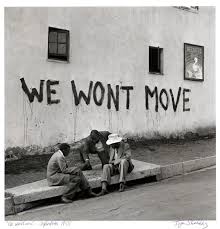
It is crucial to note that South Africa is a country where the street is a legitimate political institution. The 1976 Soweto uprising, in which schoolchildren marched against the imposition of Afrikaans and were met with police gunfire, established a template that has shaped every subsequent generation: when the state will not listen, the youth take to the streets. The Black Consciousness Movement gave that template an ideology; the township revolts of the 1980s scaled it; the United Democratic Front gave it a coalition; and in 2015 and 2016, #RhodesMustFall and #FeesMustFall demonstrated that the template still worked in a constitutional democracy. Universities were shut, statues fell, and fee increases were rolled back. The post-apartheid generation re-learned that mobilization extracts concessions in a way that polite engagement rarely does.
This is the inheritance Operation Dudula and March & March now claims and direct towards foreign nationals deemed unwelcome in South African suburbs. Their rallies borrow the visual languages of the liberation struggle – the placards, the toyi-toyi, the moral certainty – even as their content inverts it. Where 1976 demanded that the state recognize Black children as full citizens, Operation Dudula and March & March now demand that the state expel African children from public schools, hospitals, and playgrounds. The form is familiar; the substance empty. That emptiness is precisely what makes it effective. A movement that adopts the costume of the anti-apartheid tradition is harder for ANC veterans to denounce, harder for young South Africans to reject, and harder for the press to characterize as fringe.
The economy of disillusionment
None of these would have the current purchase without the economic conditions that surround it. By the fourth quarter of 2025, Statistics South Africa put youth unemployment (ages 15–24) at roughly 57 percent. On the broader 15–34 definition that the South African government tends to use, the figure was around 44 percent. Among the 4.8 million unemployed young people counted earlier in the year, the majority had never held a formal job. These are not statistics about a recession; they describe a permanent exclusion of an entire generation from the economy that the Rainbow Nation promised them.
That exclusion sits underneath an equally generational disenchantment with the African National Congress. In May 2024, the ANC dropped to roughly 40 percent of the national vote, losing its parliamentary majority for the first time since 1994. The Government of National Unity that emerged – stitching the ANC together with the Democratic Alliance, the Inkatha Freedom Party, the Patriotic Alliance, and a half-dozen smaller parties – has been a coalition of necessity rather than vision, lurching from a VAT crisis to public quarrels over Cabinet portfolios. For a young South African watching loadshedding, water cuts, collapsing municipalities, and a 57 percent chance of being unemployed, the official politics of compromise can look identical to the official politics of failure.
Grievance entrepreneurs like Operation Dudula and March & March do not have to invent the anger; they only need to direct it. And they direct it almost entirely downward and across, at people without the political protection of citizenship: street traders in Hillbrow, asylum seekers queuing at Home Affairs, Zimbabwean farmworkers in De Doorns, and Malawian parents trying to register a child for school. The movements offer something the GNU cannot: a story in which the cause of South African suffering is identifiable, embodied, and physically removable.
What happens next?
On 20 April, a counter-protest at Mary Fitzgerald was held by a small group, perhaps 150 people, but it mattered. It was organized by Kopanang Africa Against Xenophobia together with migrant-led organizations, and it deliberately reclaimed the protest tradition for a different argument. “No person is illegal”, a 1976 sentence that insists that the state cannot decide which Africans are real Africans. Whether that argument can match the mobilizing energy of Operation Dudula and March & March in a country with 57 percent youth unemployment is an open political question.
There is a tendency, in foreign coverage, to treat South African Afrophobia as a moral failing to be condemned at a distance. That framing misses what is at stake. South Africa is a country whose democratic identity was built on the legitimacy of mass mobilization, and whose economic settlement has not held its end of the bargain. The protest tradition is not going anywhere. The only question is the question the country’s ruling coalition has so far refused to answer, which is whether that tradition will be claimed by people demanding that the promise of 1994 be extended to all Africans on South African soil, or by people demanding its narrowing for a few. Apartheid taught South Africans how to think about foreign natives, and three decades on, the country is still deciding whether to unlearn the lesson.
Sources and further reading
• Statistics South Africa, Quarterly Labour Force Survey, Q1 2025 and Q4 2025 releases.
• Lawyers for Human Rights, press statement on the high court interdict against Operation Dudula (2025).
• International Commission of Jurists, submissions on migrant rights in South Africa (2025).
• Human Rights Watch, World Report 2026: South Africa chapter.
• Xenowatch, African Centre for Migration & Society, Wits University – incident tracking, 2025.
• Mahmood Mamdani, Citizen and Subject; Michael Neocosmos, From ‘Foreign Natives’ to ‘Native Foreigners.'
• South African History Online, “16 June 1976: Soweto Youth Uprising” and “History of Migrant Labour in South Africa.”
• GroundUp, Moneyweb, Mail & Guardian, Africanews, IOL – reporting on Operation Dudula, March & March, and countermobilization, 2025–2026.
• Kopanang Africa Against Xenophobia https://kaax.org.za/march-for-dignity-equality-and-justice-for-all-no-one-is-illegal/